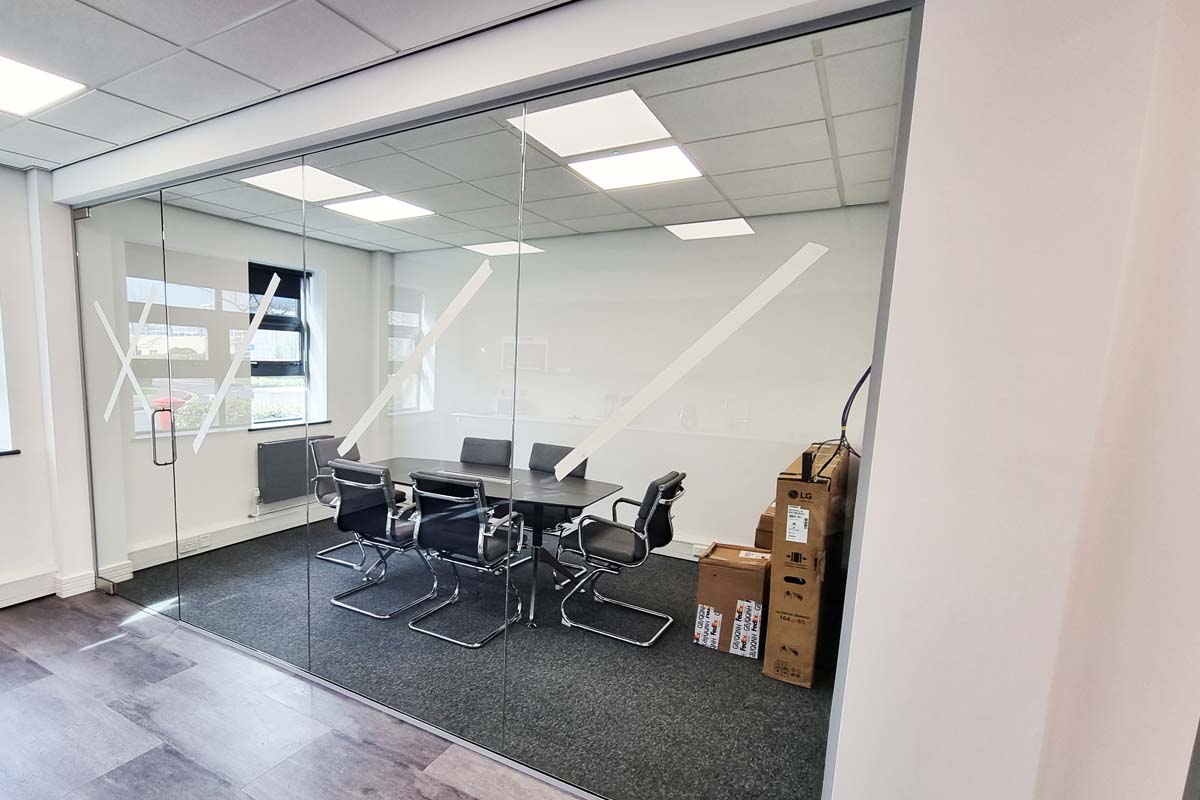
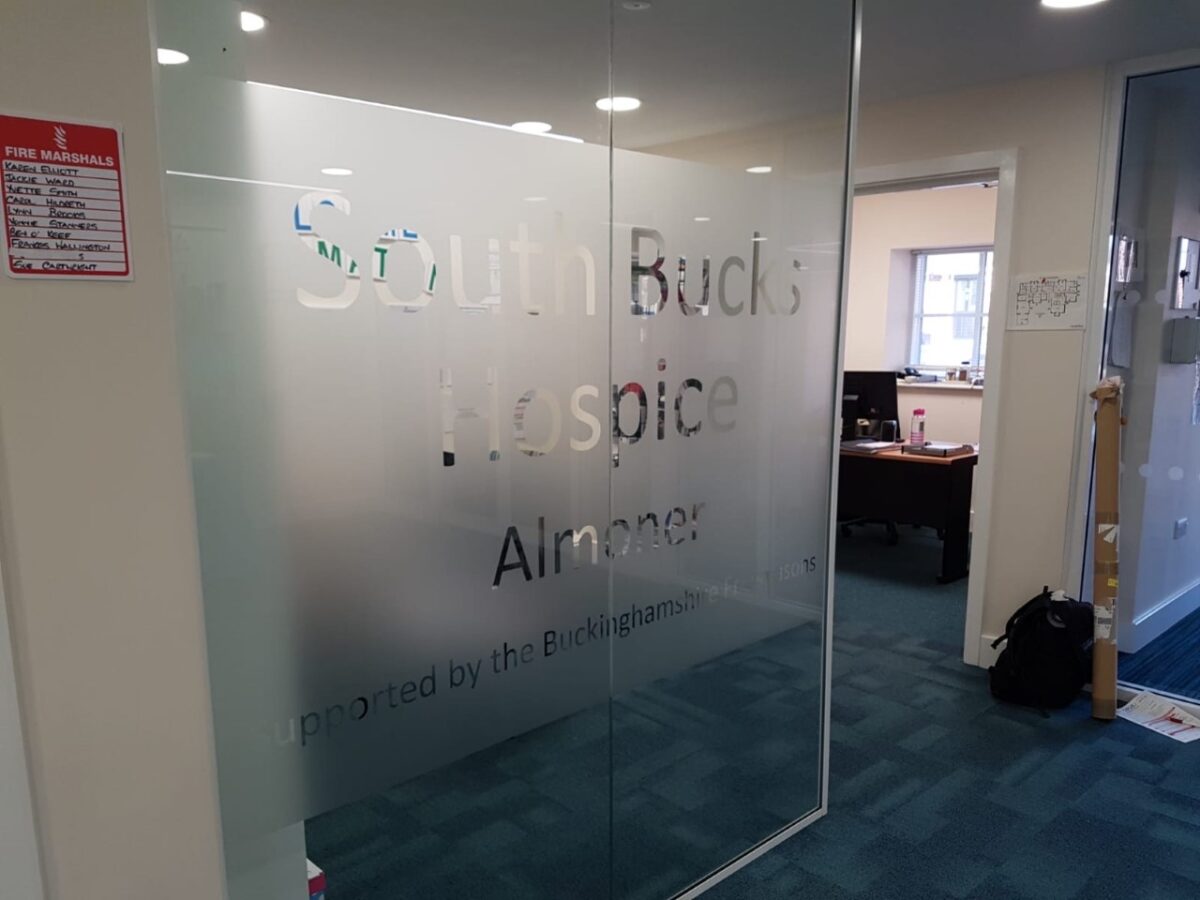
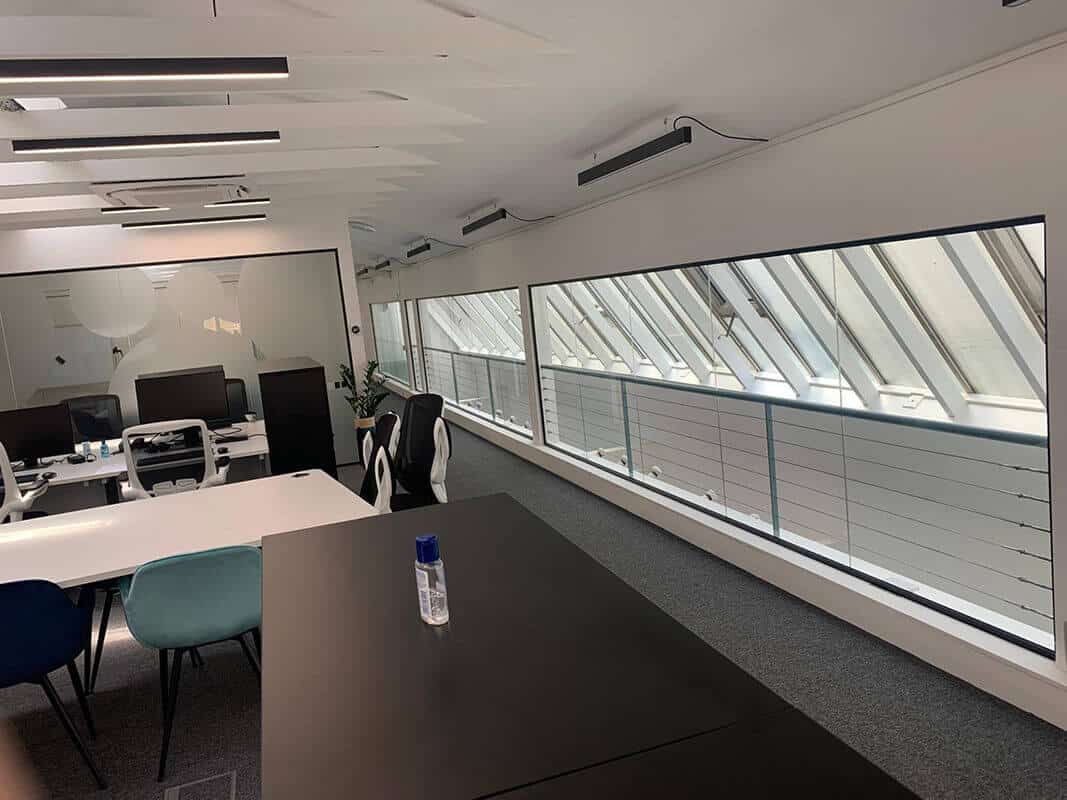
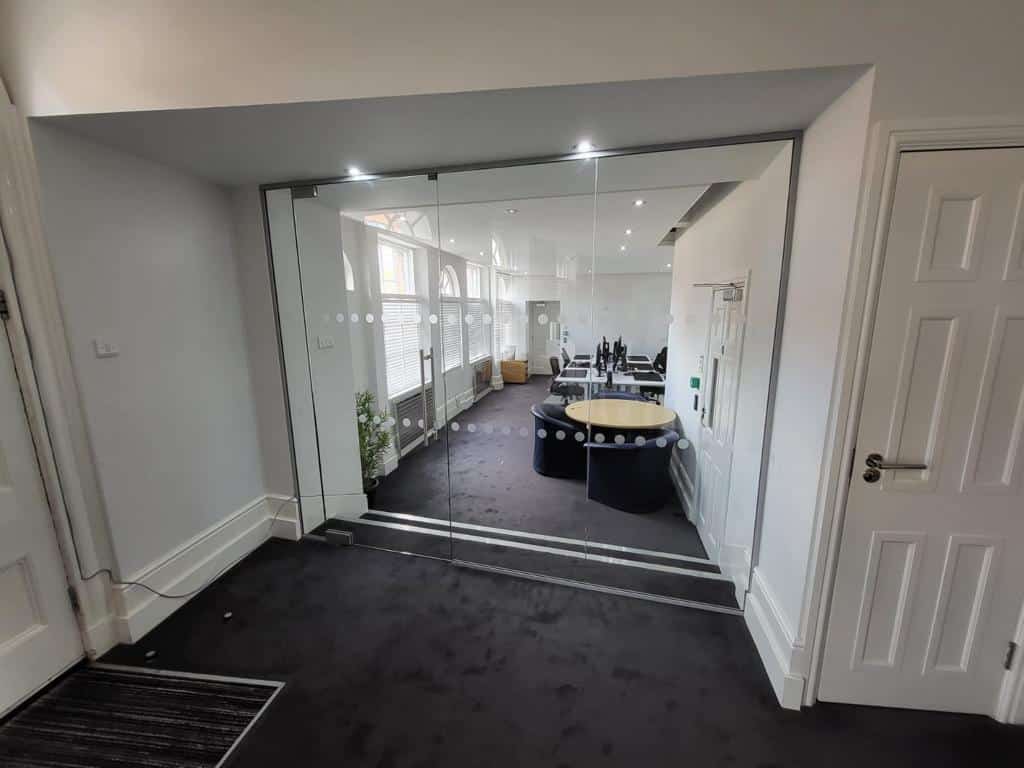
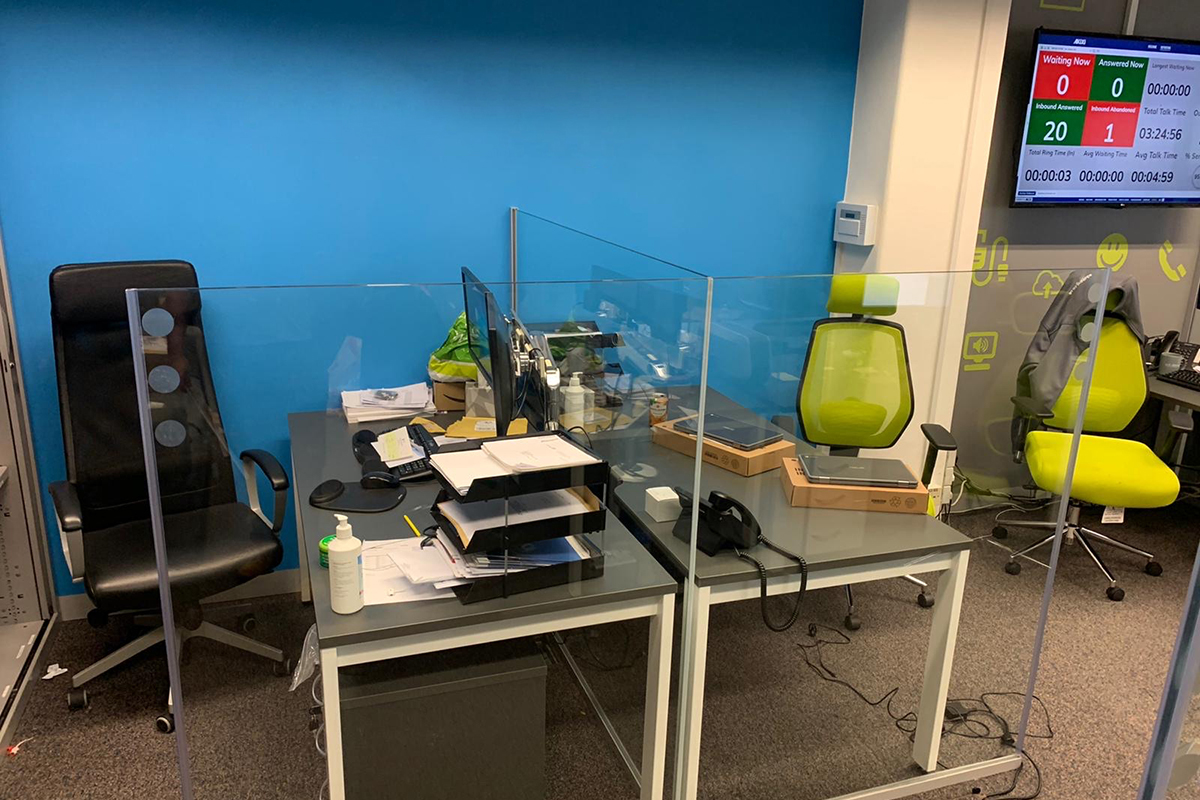
Open plan office designs certainly had their moment in the workplace. With most businesses, however, a meeting room or private space is nearly always needed, putting a bit of a spanner in those open plan style. Due to the transparency of the panels, glass partitioning is a great solution if you’re looking to keep your workplace open and collaborative, but also divide a soundproof space. With that said, it’s important to get the right specification for the tasks unique to your business. Done correctly, you can see huge benefits such as increased productivity levels, improved concentration and better team morale.
If you’re considering acoustic solutions for your office, you’re in the right place. In this acoustic glass guide, you’ll learn about soundproof partitions (and if they actually exist). We’ll cover key considerations, ratings and more to ensure you find the most appropriate solution for your space.
What are the Hidden Costs of Poor Office Acoustics?
You rarely notice great acoustics. Bad acoustics, however, quietly impact your business every single day. It’s the sales call taken in the stairwell. The meeting room booked for privacy (that actually offers none). Here are some of the real costs of poor acoustics:
- Poor Productivity – Background noise forces the brain to constantly filter speech, which increases cognitive load and fatigue. The impact of this is that staff take longer to complete focused work, make more mistakes and need more breaks to recover their concentration.
- Meeting Friction – When your team doesn’t trust your meeting rooms for the level of privacy they provide, they move their conversations to corridors, cafes and remote calls. This adds unnecessary friction to your workflow.
- Lost Client Confidence – Clients hearing internal conversations over the phone can damage professionalism and trust. Even the possibility of being overheard can change how openly teams speak.
- Confidentiality Risks – Sensitive conversations about performance, wellbeing or pay must be private. If employees don’t trust the space, they won’t speak freely (or worse, they might feel like their privacy has been breached).
- Wasted Office Space – Rooms that don’t provide privacy are less used or avoided entirely. The office might look busy, but your spaces aren’t being used as intended (meaning you’re likely paying for wasted space).
- Quiet Resentment – Noise complaints very rarely arrive as formal feedback. Instead, they surface as frustration, disengagement and reduced workplace satisfaction, which could cost you in recruitment and retention.
So, what’s the solution? Fixing acoustic problems after installation can be expensive and disruptive, especially when you could just specify the right solution properly from the start. This is true for glass partitioning.
Are Glass Partitions Soundproof?
No glass partition can be completely soundproof. One of the biggest misconceptions around glass partitions is that they offer complete acoustic privacy. People often expect “soundproof”, when what they actually need is controlled sound transmission.
If you’re looking for a “soundproof” glass partition, there are many other variables to consider – the ceiling, the flooring, and your furnishings (we could go on).
At Glass Partitioning UK, we have some easy solutions to suit different acoustic requirements:
- Single Glazed Glass Partitions – In some workplaces, noise isn’t a priority. For these, our single glazed glass walls are an affordable solution. That’s not to mean this type of glazed wall doesn’t offer any sound protection – actually, it can offer up to 33 dB.
- Double Glazed Glass Partitions – If some privacy is required, our double glazed glass walls can be a great option. This type of glass provides up to 40 dB, meaning loud speech can be heard but is hard to interpret, and normal speech is barely heard.
- Acoustic Glass Partitions – Popular within music studios and private boardrooms, acoustic glass is a premium system we offer to our customers. To the untrained eye, it looks no different to our other glazed partitions, however, a clear PVB membrane is bonded to the glass panels, adding a subtle thickness increase, but a whole lot of acoustic improvements! With an ultimate acoustic package, extremely loud speech can’t be heard.
Is Acoustic Glass Worth It?
Yes, acoustic glass is worth it, but only if it solves the right problems. It can significantly reduce noise, protect speech privacy and improve productivity, depending on how you work.
We’ve worked with plenty of customers – here’s where they’re best suited:
- Boardrooms – With high-stakes conversations happening, acoustic glass can help improve speech privacy without making the room feel enclosed or dark.
- Classrooms – In educational settings where multiple rooms operate side by side, acoustic glass reduces noise bleed between spaces, helping students concentrate and teachers maintain focus without distractions.
- Recording Studios – Acoustic glass lets musicians rehearse or record without interruptions or disruptions that could impact sound quality.
- Hotel Lounges – Glass partitions provide modern separation for private meetings or events, preventing noise from leaking into lobbies or public areas without making rooms feel closed off.
- Coworking Offices – On open-plan coworking floors, acoustic glass creates quiet, private offices that block a level of surrounding chatter, improving concentration and productivity for individuals or small teams.
Struggling with acoustics? For more advice, read our guide, packed full of steps to improve your office acoustics.

Acoustic Glass Price: What are You Paying For?
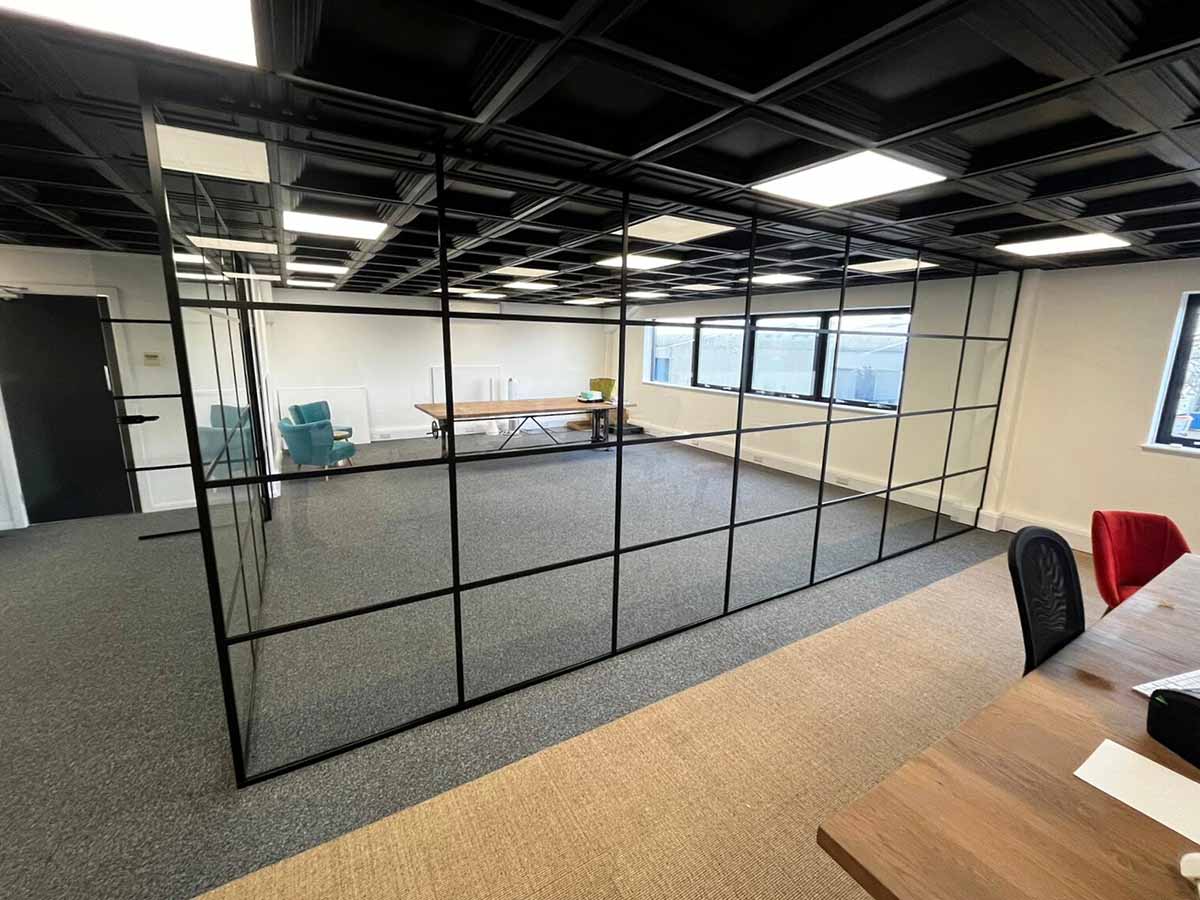
The price of our acoustic glass partitions reflects the high acoustic performance they offer. Here are a few things that impact cost to help you see value beyond the sticker price:
- Glass Type – Are you opting for single glazed acoustic glass or double glazed acoustic glass?
- Acoustic Doors – Alongside your glazed walls, you will need to consider the type of glass door you opt for.
- Banding – We’re able to add bands to your acoustic glass to create a modern design that’s popular amongst a variety of workplaces.
- Customisations – Additional features like manifestations or integrated blinds can also impact the cost of your system.
For a better understanding of your acoustic glass price, request a quote from our team of experts today.
Acoustic Glass Ratings Explained
Acoustic performance can feel full of jargon, but the idea behind it is simple: how much quieter does the space outside the room become? Acoustic glass ratings help you predict how well your partition will reduce sound before it’s installed.
Typically, this is measured in decibels (referred to as dB). This tells you how much sound is reduced when it passes through a partition. For example, if normal speech is around 60 dB and your acoustic partition has a 40 dB rating, the sound outside the room would drop to approximately 20 dB (a very quiet level).
Here’s a simple guide to our systems:
| Glass Type | dB Rating | What This Means | Typical Application |
| Level 1: Single Glazed | Up to 33 dB | Normal speech can be interpreted | Open areas with limited acoustic requirements |
| Level 2: Single Glazed Acoustic | Up to 37 dB | Loud speech may be heard; normal speech is hard to interpret | Standard offices and meeting rooms |
| Level 3: Double Glazed Safety Toughened | Up to 40 dB | Loud speech is hard to interpret; normal speech is barely heard | Meeting rooms and private areas |
| Level 4: Double Glazed Acoustic | Up to 46 dB | Loud and normal speech cannot be heard | Boardrooms and confidential spaces |
| Level 5: Ultimate Acoustic Package | Up to 50 dB | Extremely loud speech cannot be heard | Highly confidential environments |
Don’t Forget Acoustic Glass Doors
Doors are a weak point when it comes to containing sound within a room as they can create a break in your partitioning system where sound can escape. As it’s likely you’ll always need a door, there are a few additional solutions you can choose that reduce the volume of escaped noise.
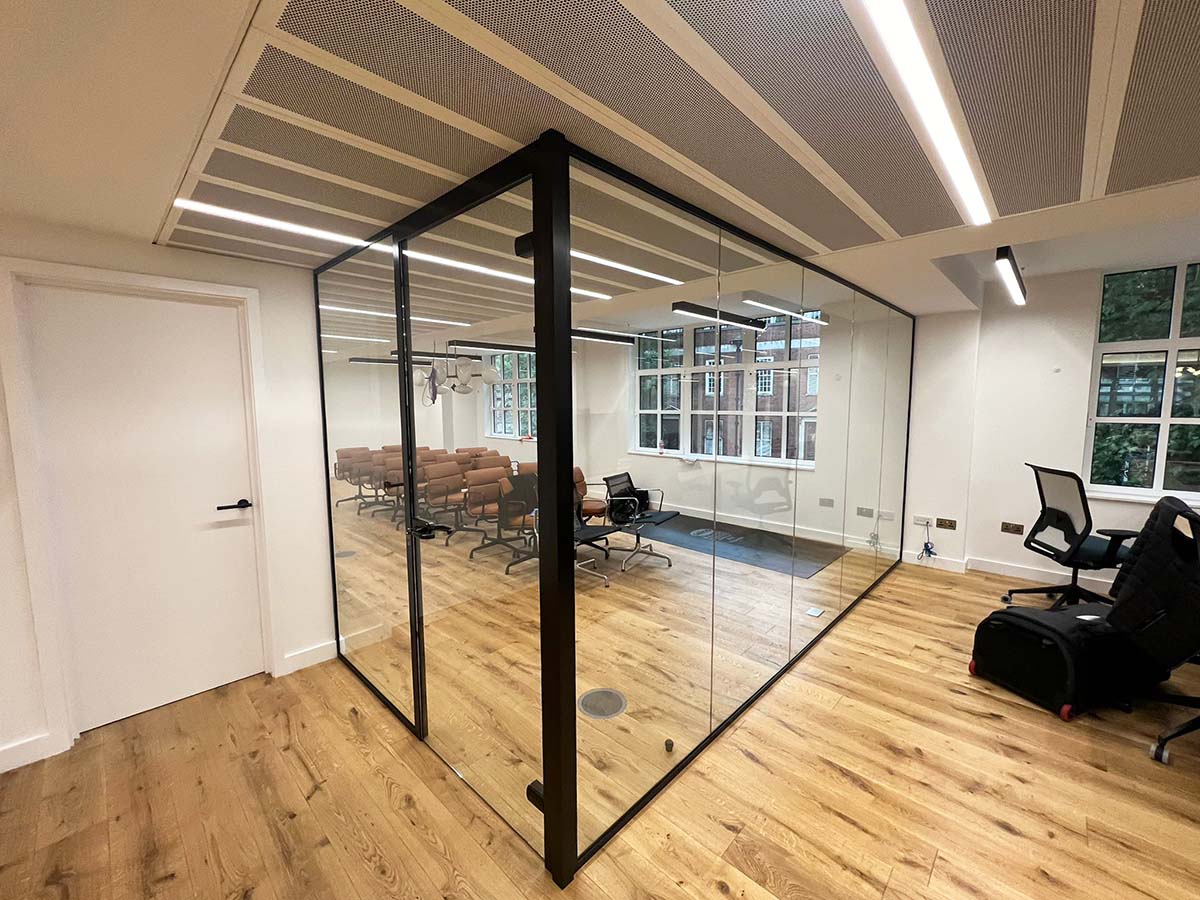
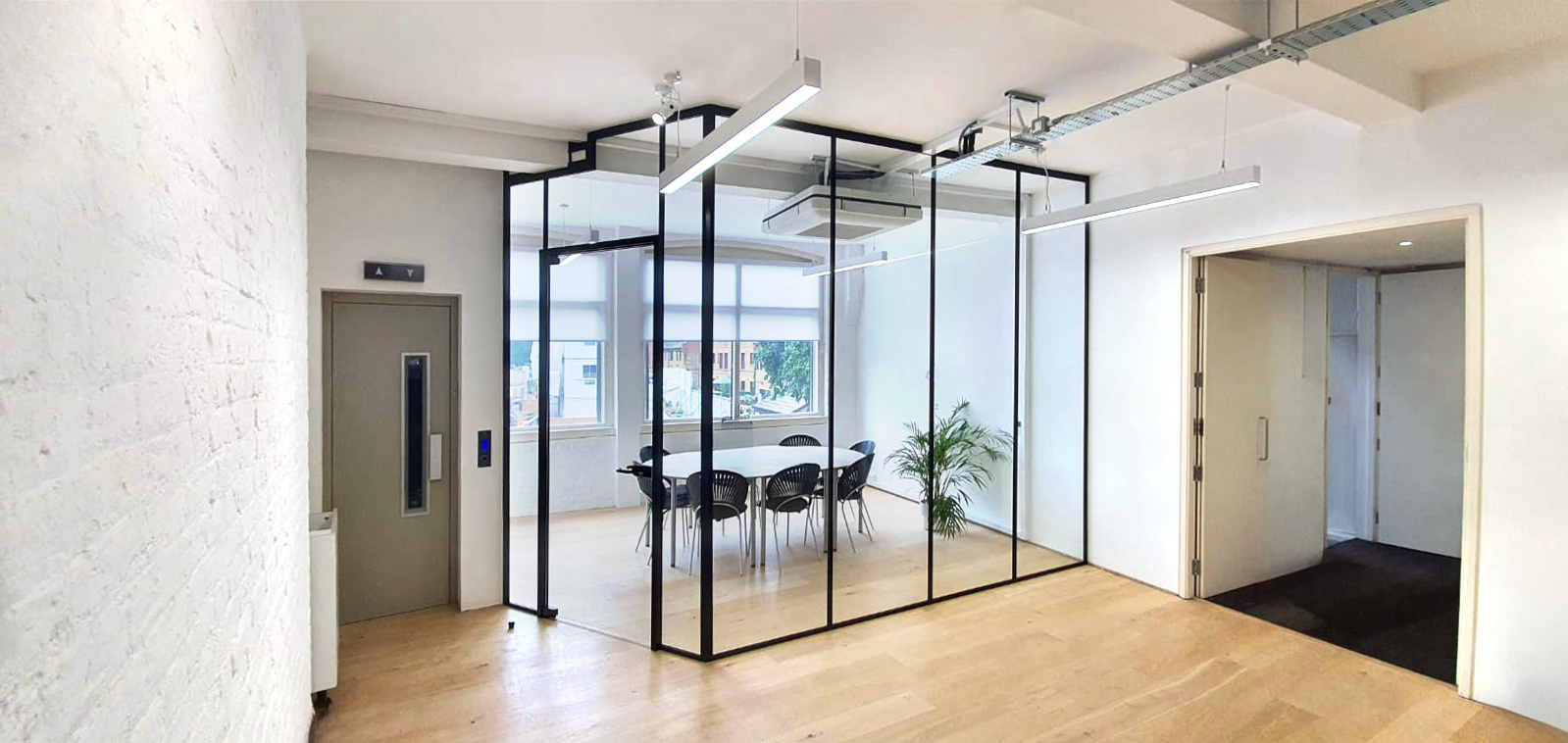
Acoustic glass doors, for example, are similarly built with a noise reducing PVB membrane. That means when you install this with your partitioning, you can prevent even more sounds from penetrating through the glass into the room (helping to keep your conversations private). We also recommend adding frames and seals around your door, especially if acoustic performance is a priority in your workplace.
Acoustic Glass vs Double Glazed Glass: What’s the Difference?
While acoustic glass reduces sound using a specialist interlayer, double glazed glass reduces sound using an air gap between two panes. Both improve acoustics, just to differing levels.
Acoustic glass offers the best acoustic performance. It uses a laminated glass with a specialist acoustic interlayer that’s sandwiched between panes. It’s this interlayer that absorbs sound. Double glazed glass uses two panes of glass separated by an air cavity. Instead of absorbing sound, the air gap creates even more distance for the sound to travel and therefore dissipate.
If you’re looking for high level acoustic performance, acoustic glass outperforms. With that said, double glazed glass walls still offer a great level of sound insulation.
Choose the Right Glass Specification for Your Workplace
Choosing the right acoustic glass isn’t about picking the thickest panel or the highest dB rating. You need to match the performance to your specific space and needs. A few tips to consider are:
- Determine the level of privacy you require
- Consider your room function and usage
- Consider the full system (not just the glass)
- Get expert advice early
Need help choosing the right solution? Our team is here to help you find the best acoustic glass specification for your space. Get in touch and we’ll guide you through the options and next steps.