
What is Acoustic Glass Partitioning?
Acoustic glass partitioning is a specialist internal glass wall that reduces sound transmission between spaces while maintaining transparency and light flow. The acoustic performance is achieved through laminated glass (either single glazed acoustic glass or double glazed acoustic glass, depending on the level of sound you require). This acoustic laminated glass works by absorbing sound energy to prevent a certain level of sound vibration from passing through the glass.
Businesses use acoustic glass walls where speech privacy and noise control are important:
- Meeting rooms
- Focus and quiet spaces
- Confidential discussion areas
- Boardrooms
- Sound-sensitive environments
Whether you need space for confidential conversations or to contain collaborative meetings, acoustic glass can be a great investment – despite misconceptions, there are plenty of ways to add privacy to your glass partitions.
What Does Acoustic Glass Look Like?
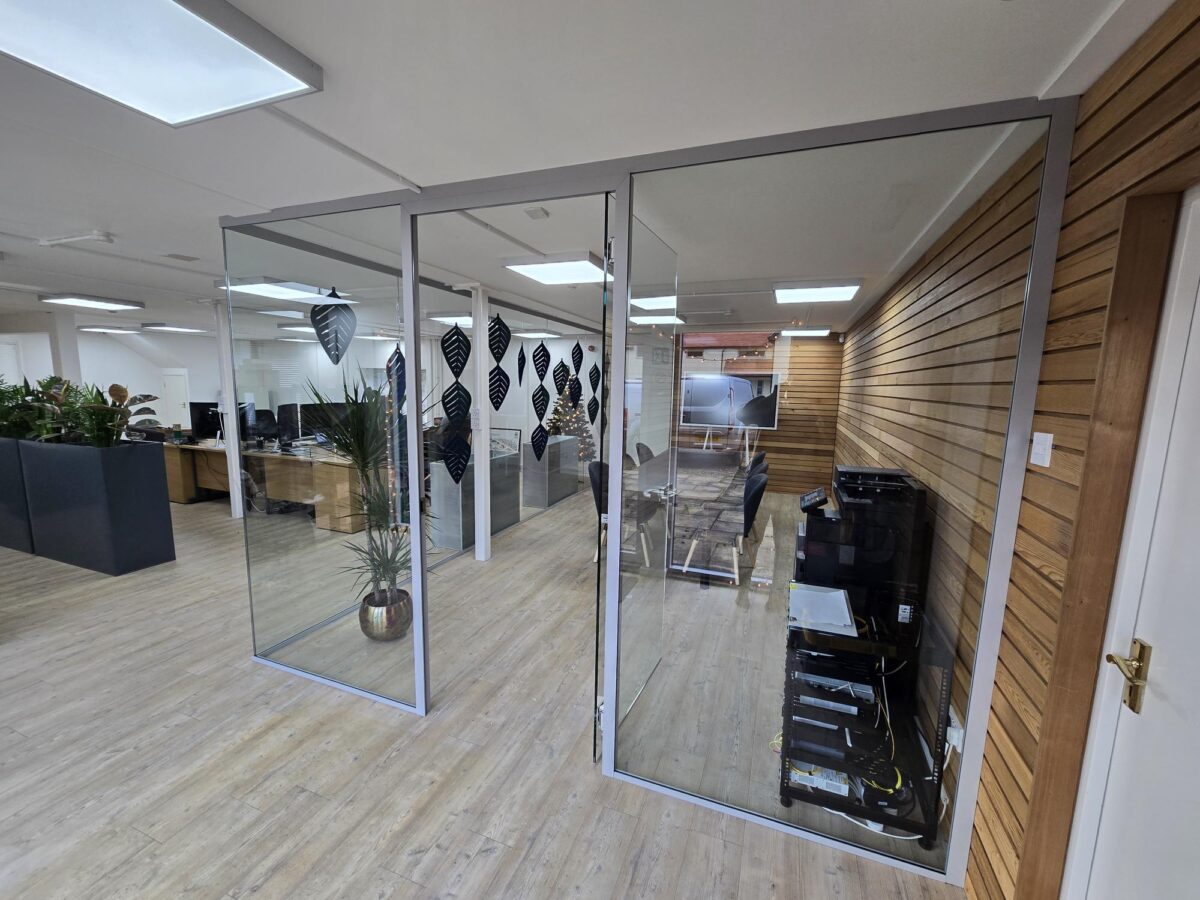
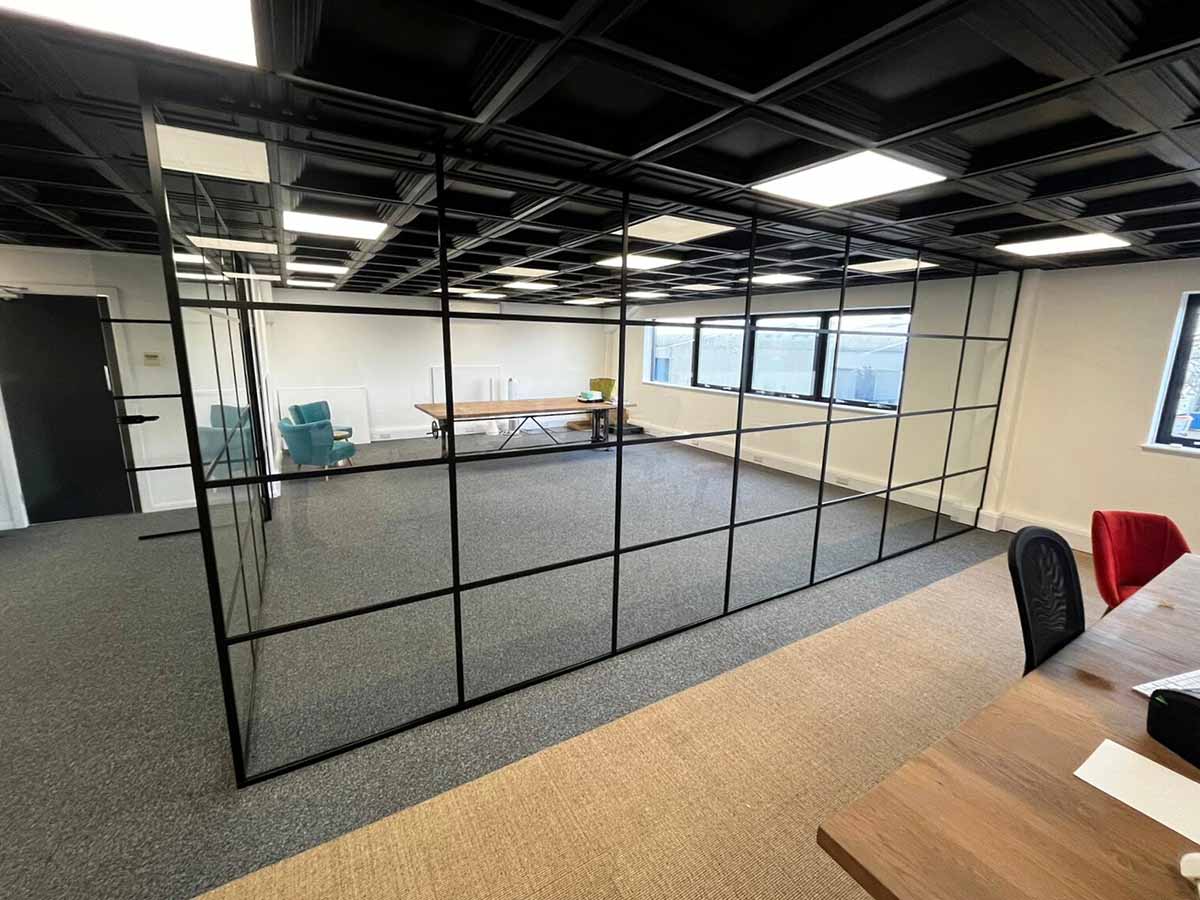
Acoustic glass office partitions don’t look much different to our standard glass partitioning. In most cases, you wouldn’t notice the visual difference at all! There is, however, a slight difference in the thickness of the glass; the acoustic laminated glass adds 0.8mm to the overall thickness. Designed to look as good as it performs, rest assured, this glazed partitioning retains a clear and minimalist appearance. Slimline aluminium tracks complete the system, creating a modern, near-frameless finish.

Key Features
Acoustic glass partitioning offers increased sound control through a combination of glass specification and system design, including:
- Professional installation to maintain system performance
- Laminated acoustic glass
- Compatibility with single glazed acoustic or double glazed acoustic systems
- Fixed glazed panels or door access configurations
Are Glass Partitions Soundproof?
Whilst there’s no such thing as a soundproof glass partition, they can offer levels of sound reduction when specified correctly. Sound reduction simply means reducing the amount of noise that passes from one room to another. We measure glass partition performance in decibels (dB), indicating how much sound is blocked. The higher the dB rating, the greater the reduction in noise transfer.
So, in short, acoustic glass partitioning reduces sound transmission but does not provide complete soundproofing.
Acoustic Glass Partitions: Acoustics Guide
Use this guide to identify the most suitable system based on the level of acoustic privacy you need. For further information, check out our guide to acoustic glass.
| Glass Types | dB Rating | What this Means | Typical Application |
|---|---|---|---|
| Level 1: Single Glazed | Up to 33dB | Normal speech can be interpreted | Open areas with limited acoustic requirements |
| Level 2: Single Glazed Acoustic | Up to 37dB | Loud speech may be heard; normal speech is hard to interpret | Standard offices and meeting rooms |
| Level 3: Double Glazed Safety Toughened | Up to 40dB | Loud speech is hard to interpret; normal speech is barely heard | Meeting rooms and private areas |
| Level 4: Double Glazed Acoustic | Up to 46dB | Loud and normal speech can’t be heard | Boardrooms and confidential spaces |
| Level 5: Ultimate Acoustic Package | Up to 50dB | Extremely loud speech can’t be heard. | Highly confidential environments |
Acoustic glass partitioning is compatible with either single glazed or double glazed glass, depending on your required acoustic rating:
- Single glazed acoustic glass partitions can achieve sound reduction up to 37 dB
- Double glazed acoustic glass partitions can achieve sound reduction up to 50 dB
The final performance depends on factors such as glass type, framing, door specification and sealing details throughout the partitioning system.
What About Acoustic Glass Doors?
Doors are always a weak point within any acoustic partitioning system, but let’s face it – we’ll be lost without them! At Glass Partitioning UK, we believe that means the glass door specification should be just as important. Two common door configurations work well with acoustic glass partitioning:
- A door in a frame – The door leaf sits within a surrounding frame. This helps improve acoustic performance by reducing sound leakage around the door edges.
- A framed door within a frame – Both the door leaf and the opening are framed. This provides additional rigidity and improved sealing, making it the preferred option where higher acoustic performance is required.
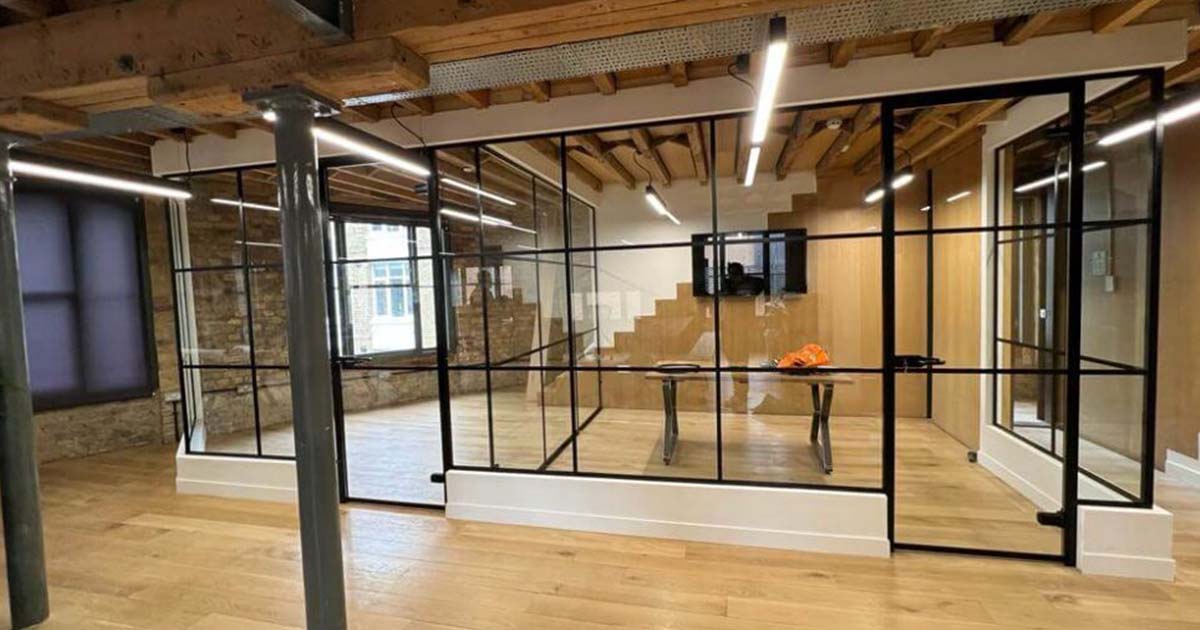
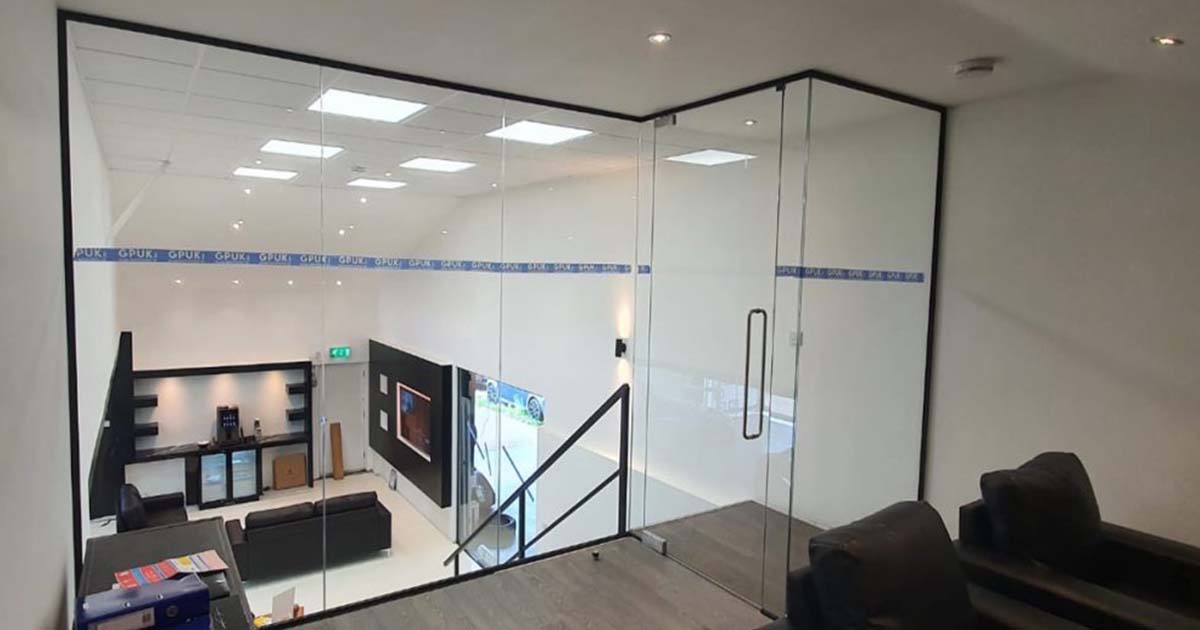
Acoustic glass doors are manufactured using the same laminated acoustic glass as the surrounding partitions to maintain consistent sound performance across the system.
Talk to a Glass Expert
Are you a noisy group? Need some space to concentrate? Is confidentiality essential within your meeting room? We have an acoustic glazed solution to help! When specifying acoustic office glass partitions, we recommend that you consider the following:
- The level of speech privacy required
- Whether a single or double glazed acoustic system is needed
- Door configuration and frequency of use
- The overall layout and adjacent spaces
- The type of flooring and ceiling and how sound travels over them
With this in mind, we can help you with installation, carried out by experienced teams familiar with the requirements of sound-sensitive environments. Correct installation, as carried out by our team, ensures the system performs as designed, with attention given to framing and door detailing to maintain acoustic integrity throughout your space. For any more information or to talk through your requirements, please don’t hesitate to get in touch with our team.
Frequently Asked Questions
Below, you’ll find answers to some of the most common questions we get asked about acoustic glass partition walls. If you can’t find the answer you’re looking for, get in touch with our glass experts.
No glass partition is completely soundproof. What they do offer is measurable sound reduction to reduce noise transfer between rooms. This will depend on the system you install, as well as other factors within your workplace.
The main difference is performance and price. Single glazed acoustic partitions can offer sound reduction up to 37 dB, whereas double glazed acoustic glass can offer up to 46 dB. Whilst the latter may come with a bigger investment, it’s required in certain work environments where more privacy is needed.
Yes! Acoustic glass is one of the most common partitioning solutions for meeting rooms because they improve privacy by reducing the level of noise transfer – plus, you get to maintain the open-plan design of your office.
Acoustic glass partitions can significantly reduce voices being heard, but they won’t eliminate sound entirely. No glaze system is completely soundproof, and it’s important to be realistic about that.
This is because the acoustic performance of a room depends on more than just the glass. Hard surfaces, ceiling types, flooring, furnishing and more all influence how sound travels.
There are several factors that influence the acoustic performance of glazed partitions, including:
- The level of glazing
- The thickness and type of glass used
- The quality of installation
- Perimeter seals and door drop seals
- The surrounding walls, ceilings and floors
Acoustic performance isn’t just about the glass – it’s about how the entire room works together.
Often, yes – but typically, you wouldn’t notice! Acoustic partitions have an additional acoustic membrane that increases the thickness, but we’re talking millimetres, which the untrained eye is unlikely to see.
In some cases, yes – but it depends on the existing system.
Upgrading may involve replacing the glass, improving seals or upgrading doors. Not all standard partitions, however, can simply be “made acoustic” without significant changes.
We’d always recommend assessing the current setup first to understand what level of improvement is realistically achievable.